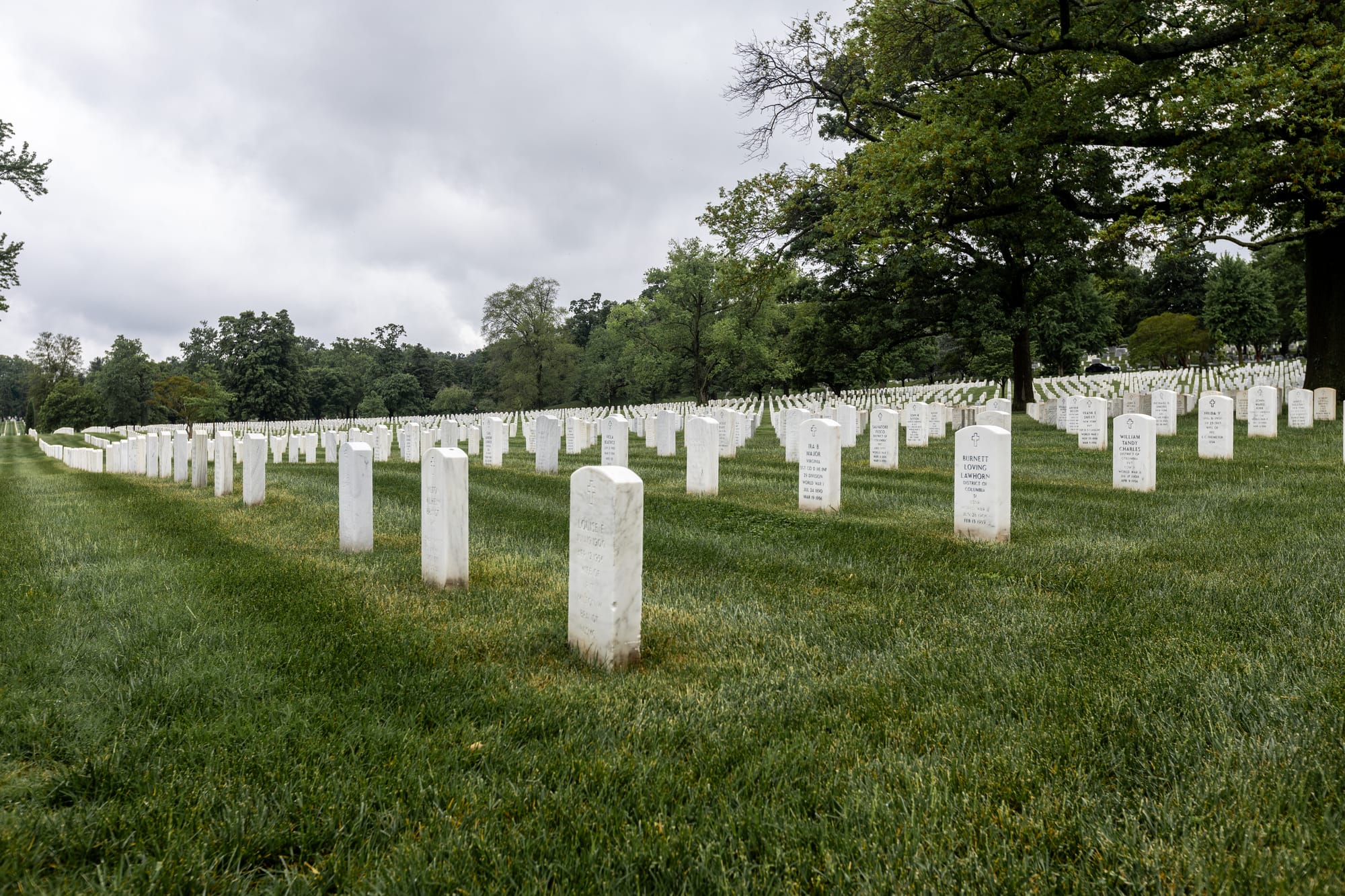
Before the Name is Lost: A Cemeterian's Notes on Headstone Restoration

The stone felt like packed sugar under my fingers, crumbling at the edges. It belonged to a private from the 14th Connecticut, fallen at Antietam. For a hundred years, his marble tablet stood watch, but the winters had been hard, the rains acidic, and the lichens had taken deep root. Now the date of his death was nearly gone, the last line of the epitaph a ghost. The question we face as cemeterians isn’t just about grounds care; it’s about memory itself. When a stone fails, we risk losing the public record of a life.
This work is a practice of patience. It’s a quiet conversation with the past, and it begins not with a power washer, but with a careful look.
First, Do No Harm
Before any tool is lifted, we assess. What is the material? Sandstone, slate, marble, granite? Each has its own character, its own fragility. Granite can withstand more than soft, porous marble. Slate can delaminate, flaking away in sheets like pastry. Knowing the stone is the foundation of any responsible restoration plan.
We saw this firsthand at the old Northwood Cemetery, where a community volunteer group, full of good intentions, arrived one Saturday with bleach and wire brushes. They scrubbed a row of Civil War-era marble markers with vigor. The immediate result looked bright and clean. A year later, the surface of those stones was pitted and crumbling. The bleach had reacted with the calcite in the marble, and the wire brushes had scoured away the delicate, polished outer layer, exposing the much more vulnerable interior to the elements. They had accelerated the decay by decades.
The proper approach is always the gentlest one that works. For biological growth—the green, black, and orange blooms that obscure inscriptions—we use a pH-neutral biological cleaning solution approved for conservation work. It’s sprayed on and left to work with the rain and sun, killing the growth without harming the stone. A gentle scrub with a natural-bristle brush and a thorough rinse with low-pressure water is often all that’s needed. It is not a dramatic, one-day transformation. It is a slow, respectful cleansing that honors the material’s integrity.
The Art of the Reset and Repair
A clean stone that leans at a forty-five-degree angle is a problem half-solved. Resetting a headstone is heavy work, but it is often the most important intervention we can make to prevent a catastrophic break.
The process is methodical. We carefully excavate around the base, often discovering the original stone footing has failed or was inadequate from the start. The marker is protected with padding and carefully lifted out—never levered against itself—and set aside. We then dig a new foundation, one that goes below the frost line if possible. A layer of crushed stone is added and tamped level, creating a stable, well-draining base that will resist the seasonal heave of the ground.
The goal is not to make a 150-year-old monument look new. The goal is to ensure it can gracefully live for another 150 years.
Mending a broken stone is a more delicate matter. For a clean break in a tablet, a specialized stone epoxy, applied sparingly, can create a bond stronger than the stone itself. For heavier monuments, stainless steel or fiberglass pins may be required to join the pieces, a job best left to a professional conservator. The key is using modern materials that are reversible and that will not introduce new problems, like a rusting iron pin that expands and cracks the very stone it was meant to save.
When Preservation Becomes Documentation
Sometimes, a headstone is too far gone. The surface has sugared, the inscription is flaked away, or it has shattered into a dozen pieces. In these cases, the cemeterian’s work shifts from restoration to documentation. The stone’s service as a physical marker is ending, but its role as a record can, and must, continue.
High-resolution photographs are the first step. Take them in raking light, early in the morning or late in the afternoon, to cast shadows that make worn inscriptions legible. Transcribe every visible letter and number. Measure the stone. Note its material and any iconography. This information, entered into the cemetery’s permanent records, becomes the new memorial. It ensures that even if the physical artifact turns back into earth, the decedent’s place in the community’s story remains secure.
This work is a trust. We are charged with the care of these resting places and the names they hold. To clean a stone, to straighten it, to record what is written upon it—these are not merely tasks of maintenance. They are acts of remembrance.