AI in Funeral Home Operations
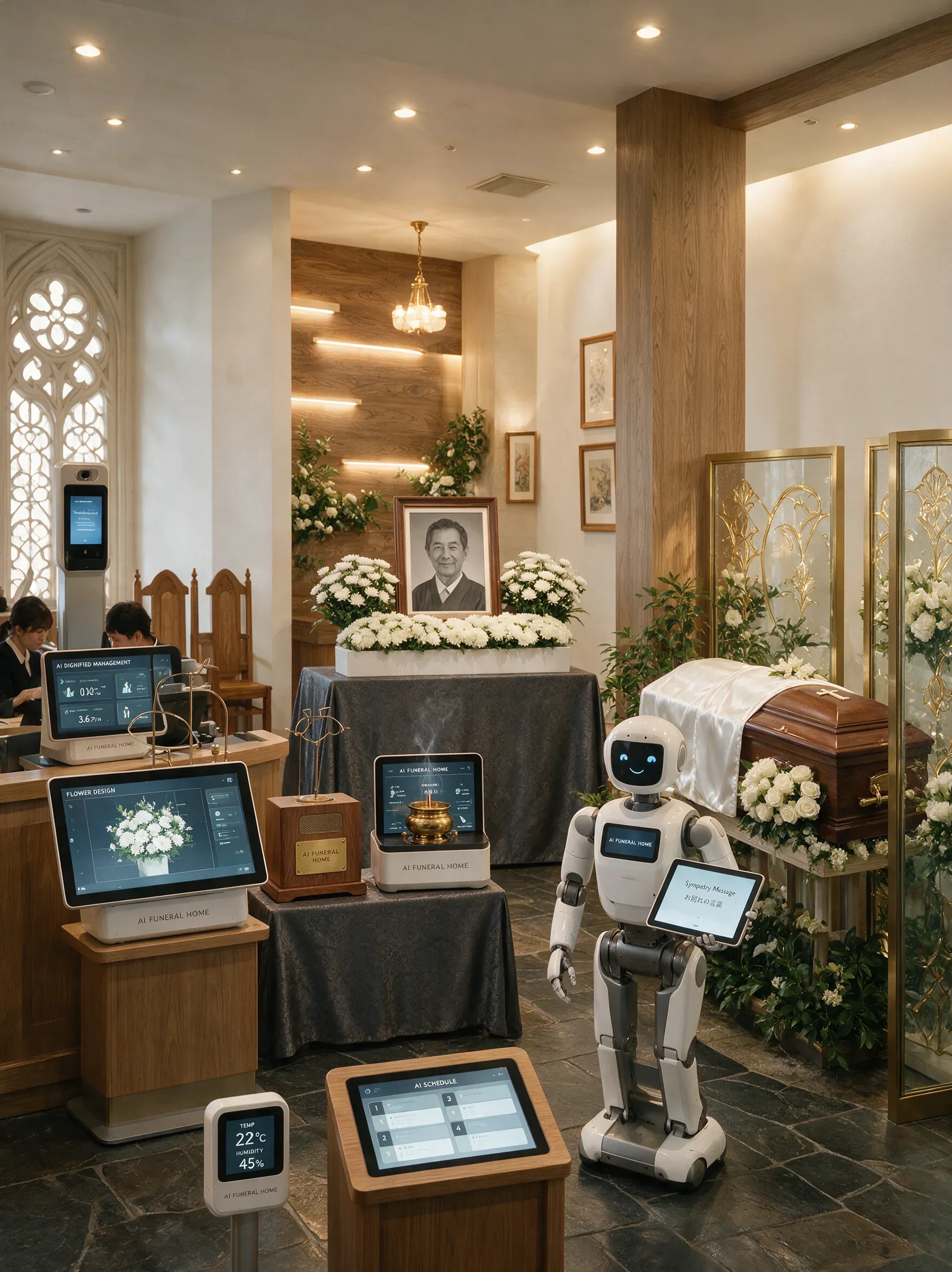
Funeral service is one of the most human professions there is. Families come to you at the worst moment of their lives, and the quality of your care is measured in small, personal moments: a name pronounced correctly, a phone call returned quickly, a service that runs without a single visible hitch.
None of that is work for a machine. But a surprising amount of what surrounds it is.
The average funeral director spends a large share of every case on paperwork, data entry, scheduling, and follow-up. That is time not spent with the family. This is exactly where artificial intelligence earns its place in a modern funeral home: not by replacing the human element, but by clearing the administrative weight around it so your staff can do the work only people can do.
Here is where AI is already making a practical difference in day-to-day operations.
Cutting the paperwork burden
Every case generates a stack of documents. Death certificates, burial and cremation permits, veterans' paperwork, insurance assignments, obituary drafts, contracts. Much of it repeats the same core information in slightly different forms.
AI-assisted systems can pull a family's intake details once and populate the fields across every downstream document, flagging anything that looks incomplete or inconsistent before it becomes a problem. What used to be an hour of retyping becomes a few minutes of review. The director still checks and signs off, but the mechanical part is gone.
First-call intake that never sleeps
Death does not keep business hours. When a family calls at 2 a.m., the experience they have in that first minute shapes how they feel about your firm for years.
AI-powered intake can capture the essentials of a first call around the clock, gather the information your on-call director needs, and make sure nothing is lost between the initial contact and the arrangement conference. It does not pretend to be a person and it should not try to. It simply guarantees that a grieving family is met with a calm, structured response instead of a voicemail box.
Drafting obituaries and memorial content
Writing an obituary is delicate. Families often struggle to start, and staff are asked to turn a few scattered facts into something worthy of a life.
AI can produce a respectful first draft from the details a family provides, giving them something to react to and edit rather than a blank page. The same applies to memorial cards, service programs, and tribute videos. The tone still comes from you and the family. The blank-page problem simply disappears.
Smarter scheduling and logistics
A single day can involve multiple services, limited chapel space, a shared fleet of vehicles, and staff who cannot be in two places at once. Coordinating it by hand invites conflicts.
AI scheduling tools weigh all of these constraints at once and surface conflicts before they happen, suggesting arrangements that keep vehicles, facilities, and people from colliding. For firms running several locations, this is the difference between a controlled day and a scramble.
Records digitization and instant retrieval
Many firms are still sitting on decades of paper records and legacy systems that no one wants to touch. That history is valuable. Families return across generations, and being able to answer "you handled my grandfather's service in 1994" builds trust that marketing cannot buy.
Modern tools can digitize old records and make them searchable in plain language, so a staff member can find a prior case in seconds instead of walking to a filing cabinet. Migrating off aging software also removes a quiet operational risk that most owners would rather not think about.
Cleaner financials and pre-need tracking
Pre-need contracts, trust and insurance funding, at-need billing, and aging receivables are easy to lose track of across a busy year. AI can monitor pre-need maturity, flag accounts that need attention, and keep at-need billing moving so revenue does not slip through the cracks. This is unglamorous work, and it is exactly the kind of thing software should be doing quietly in the background.
Cemetery and grounds operations
For firms that also manage cemetery property, AI extends into the grounds themselves. Digital mapping of plots, accurate records of ownership and occupancy, and structured tracking of maintenance requests turn a historically manual operation into something a family can interact with online. When a family can locate a loved one's resting place and request care with a few taps, you have raised the standard of service without adding staff.
Where the line has to stay firm
None of this works if it costs you the thing families actually come for. A few principles keep AI on the right side of that line.
Keep a human in every decision that touches a family. AI drafts, suggests, and flags. People approve, sign, and speak.
Protect the data. Deathcare records are deeply personal. Any system you adopt should treat privacy and security as non-negotiable, not as a feature.
Never automate empathy. The condolence call, the arrangement conference, the moment at the graveside: these are the profession. Automating them would be a failure, not an efficiency.
Used this way, AI does not make a funeral home feel less personal. It makes it feel more personal, because your staff finally have the time and attention that the admin pile has been stealing.
Getting started without overhauling everything
You do not need to reinvent your firm to benefit from this. Start where the pain is loudest. If paperwork is drowning your directors, begin there. If first-call coverage is inconsistent, start with intake. If your records are a liability, start with digitization.
The goal is not technology for its own sake. It is giving your people back the hours that families deserve.
That is the entire idea behind Tendmory: an AI-native platform built specifically for funeral homes, crematories, and cemeteries, so the operational weight moves off your team and the human work stays exactly where it belongs. If you want to see what that looks like for your firm, we would be glad to show you.